
Practice the way
you always meant to.
Hannah's Gift is Colorado ABA built on one clinical conviction: the relationship between a child and a well-matched clinician is the active ingredient — not a staffing line. We start families in about three weeks, match on language, culture, and personality, and protect your caseload so the work stays worth doing.
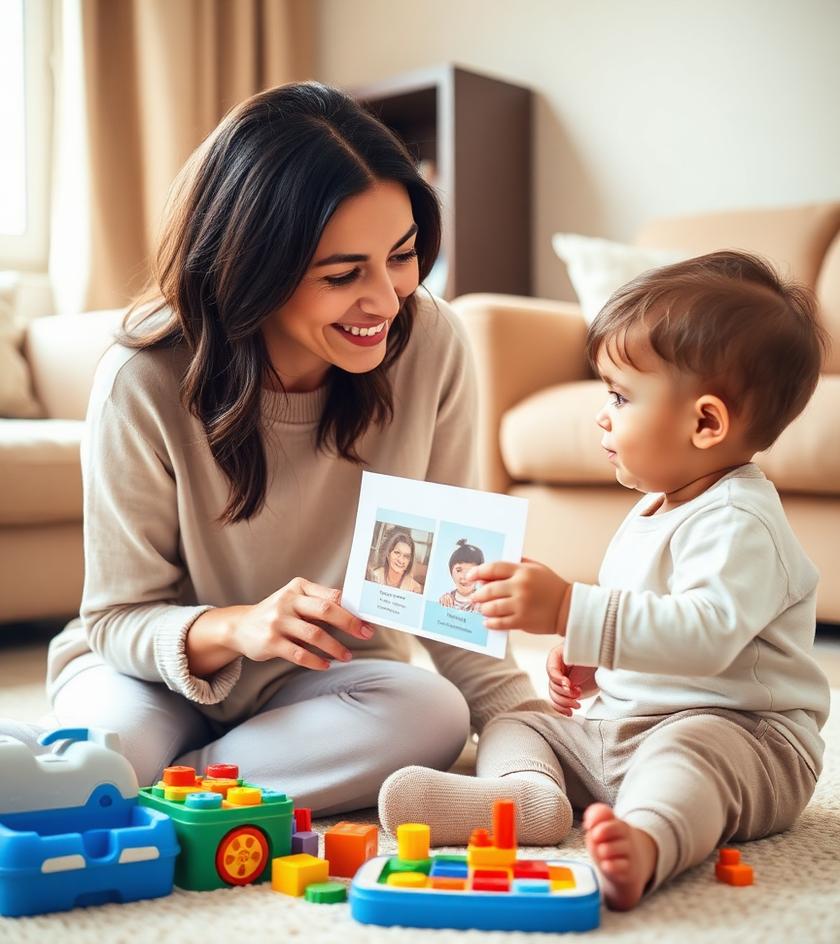
Most Colorado kids who need ABA never get it.
Two barriers do the damage: access that takes six to twelve months, and matches so poor the clinician leaves before the child ever connects. Both are fixable — so we fixed them. No family is too far away, and no clinician should have to choose between speed and doing it right.
We need clinicians who want to practice that way.
Three things we refuse to compromise.
We protect the dyad like a protocol.
It takes three to four months to pair, establish instructional control, and condition ourselves as a source of reinforcement. Then the field's RBT turnover rips that out and you restart from pairing — the child never clears the rapport stage. So we match on language, culture, personality, and clinical skill, and we build the entire model to keep that dyad intact.
Matching on language isn't soft. If a child's mand repertoire is Spanish, an English-only tech literally can't capture and reinforce communication in the home's verbal community.
Speed is a clinical variable, not a courtesy.
Six to twelve months between diagnosis and first session is time bled out of the highest-plasticity window we'll ever get with that child. When we accept a case, we start it — application to therapy in about three weeks — because early-intensive effect sizes are age-sensitive and every month on a list is intervention we don't get back.
The one place we trade speed for fit on purpose: we'll start a week later to seat the right dyad rather than start fast with the wrong one.
In-home and in-school, because generalization is the point.
Generality is one of Baer, Wolf & Risley's seven dimensions — and the one clinic-bound models quietly fail. Teach discrimination in a therapy room and you inherit the entire stimulus-generalization problem on the back end.
We assess and treat where behavior actually meets its contingencies — the hard morning transition, the cafeteria, the sibling conflict — so the MOs are real, the functional assessment is valid, and maintenance is programmed into the natural environment.
What makes us different.
The parts other agencies skip are the ones that decide whether a child gets care at all. Those are the parts we built.
We educate and train every clinician.
We don't wait for credentialed staff to apply and then fight over the same scarce pool. We train our own, and we tailor it to each person at every level. It starts in a gamified simulator, where trainees run virtual sessions against real clinical scenarios, get immediate feedback, and build the skills that matter — pairing, prompting, data, assent — before they ever step into a home.
That is how we reach the child four hours from Denver that no one else will drive to.
Two kinds of BCBA, on purpose.
Mostly hybridAssessment BCBAs
Own intake and assessments, and write the treatment plan the dyad will run. They set the direction of care.
Supervision BCBAs
Run the dyads day to day, supervise RBTs and BTs, and protect treatment fidelity out in the field.
Splitting the role means neither BCBA is buried in the other's work, and both stay hybrid, so your week isn't all paperwork or all drive time.
No family is too far.
Because we grow local talent, distance stops being the reason a child goes without care — a kid four hours out gets the same team a kid downtown does.
Trained in the setting.
Supervision, feedback, and skill-building happen where the child actually learns — the home, the school, the community — not in a conference room a week later.
Rooted in a promise.
"The child I prayed for" isn't decoration. Every role is built to treat the child in front of you like the answer to someone's prayer.
A caseload you can actually be a clinician on.
The field's own planning guidance assumes far lighter caseloads than most agencies actually run. Push a caseload high enough and supervision quality and treatment fidelity are the first things to go — right before the analyst does.
So we protect your caseload, and we grow our own clinicians — a real BT → RBT pathway — to reach the far and hard cases without stretching anyone past the point the work stays good.
Colorado-rooted. Just getting started.
We started in Colorado and we're expanding into Maryland, Utah, and Ohio — with a goal of a thousand families in care by the end of 2027. Clinical and Operations are built so every role keeps the same promise: the child in front of you is treated like the answer to someone's prayer.
Come build this with us.
We're hiring BCBAs, RBTs, and Behavior Technicians across Colorado, with new roles opening in Maryland, Utah, and Ohio. If you've been waiting for a place that practices the way you always meant to — this is it.